

Best Lab Practices
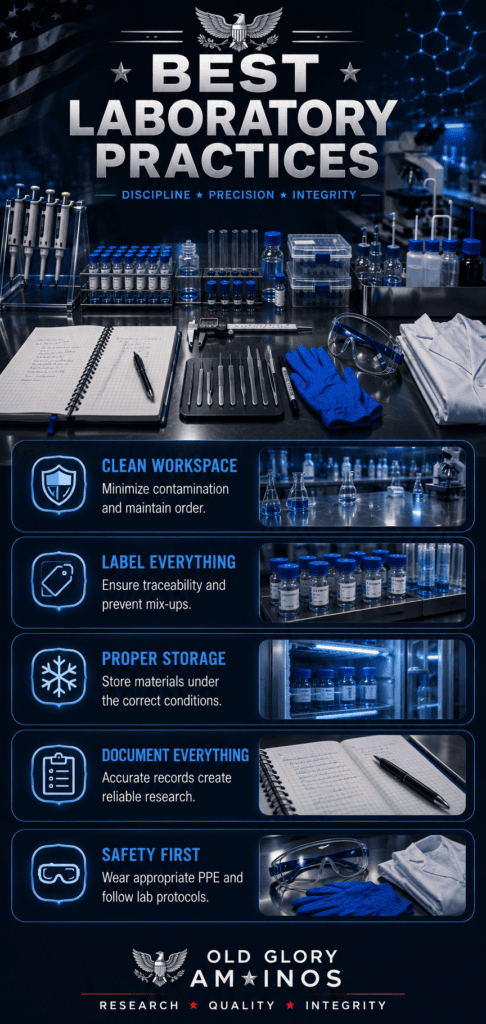
AT A GLANCE
reading time 4-5 minutes
You’ll Learn
- Why consistent laboratory practices support reliable, reproducible research
- How proper sample labeling and traceability help prevent mix-ups and preserve experimental context
- How clean workspaces, equipment, and handling practices help reduce contamination and cross-contamination
- Why laboratory equipment should be appropriate, maintained, and verified for the work being performed
- How accurate documentation and record keeping make results easier to evaluate and reproduce
- Why storage, handling, and safety procedures should follow the requirements of the specific material and experiment
Introduction
Reliable research depends on more than the quality of the materials being studied. It also depends on how samples are identified, handled, measured, documented, and protected from contamination throughout the research process.
Small inconsistencies—such as incomplete labeling, unrecorded procedural changes, contaminated equipment, or unreliable measurements—can introduce variables that make results more difficult to interpret or reproduce.
Good laboratory practices help control those variables. Consistent procedures, clear records, appropriate equipment, and careful sample handling create a more traceable research process and make it easier to understand what happened, what was measured, and how a result was produced.
🔬 RESEARCH NOTE
Good laboratory practice is not simply about keeping a workspace neat. Its larger purpose is to reduce avoidable sources of error and create a documented research process that can be evaluated and reproduced.
Keep Your Workspace & Equipment Clean
A clean, organized workspace helps reduce the risk of contamination and cross-contamination between research materials.
Work surfaces, reusable equipment, containers, and tools should be cleaned or prepared according to the procedures appropriate for the work being performed. Unnecessary materials should also be kept away from the active work area to reduce opportunities for accidental contact, spills, or sample mix-ups.
Contamination is not always obvious. Even small amounts of material transferred from a surface, tool, container, or another sample can introduce an unwanted variable into an experiment.
⚠️ IMPORTANT DISTINCTION
A workspace that looks clean is not necessarily free from contamination. Visual cleanliness and contamination control are related, but they are not the same thing.
🔬 RESEARCH NOTE
When the same equipment or workspace is used with multiple materials, procedures that reduce carryover between samples become especially important for maintaining the integrity of subsequent work.
Label Samples for Traceability
Clear labeling helps maintain the connection between a research material, its source, and the work performed with it. Without that connection, even accurate analytical results can become difficult to interpret later.
Depending on the research procedure, useful sample information may include the material or sample name, lot or batch number, unique sample identifier, preparation date, concentration or other preparation details, and relevant storage information. The label itself does not need to contain every experimental detail, but it should provide enough information to connect the sample to the corresponding laboratory record.
Consistent naming conventions are also important. Using the same identifier on the sample container, experimental records, analytical data, and related documentation makes it easier to follow the sample throughout the research process.
📊 READING THE DATA
Think of sample identification as a chain: material → sample → experiment → analytical result. Clear identifiers help preserve that connection from beginning to end.
⚠️ IMPORTANT DISTINCTION
A label identifies the container. Traceability connects that container to its history. Good traceability depends on both accurate labeling and complete documentation.
Use Appropriate & Reliable Equipment
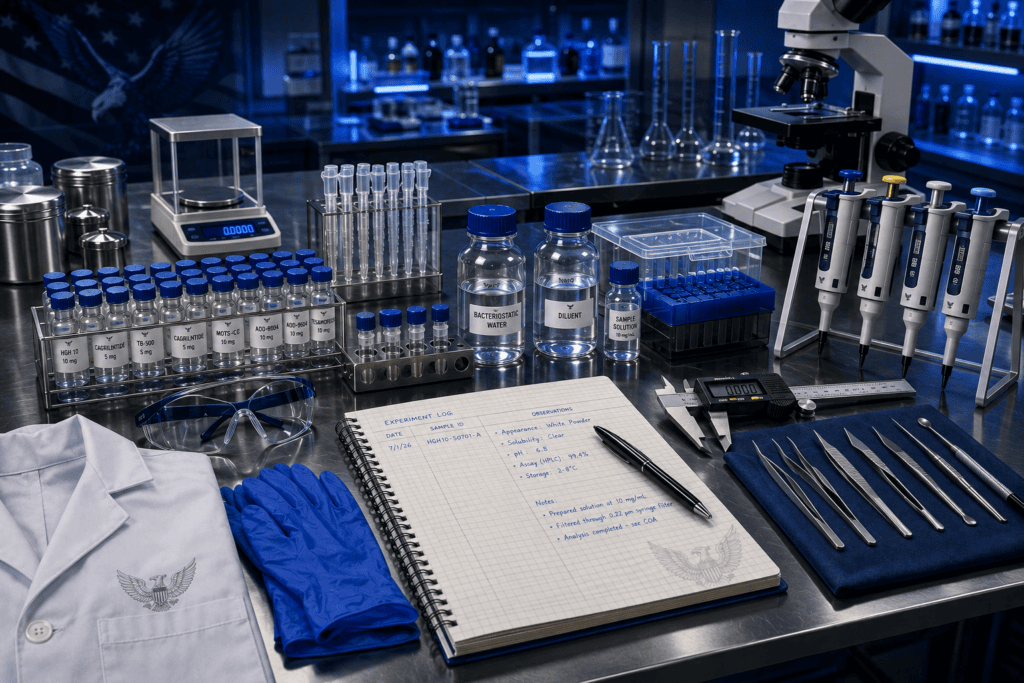
Research results are only as reliable as the measurements used to produce them. Equipment such as balances, pipettes, temperature-monitoring devices, and analytical instruments should be appropriate for the measurement being performed and used within their intended operating range.
Laboratory equipment may also require routine calibration, verification, maintenance, or performance checks, depending on the instrument and procedure. These practices help establish that measurements are being produced consistently and within acceptable limits.
Even careful technique cannot fully compensate for equipment that is inaccurate, improperly maintained, or unsuitable for the measurement being made.
🔬 RESEARCH NOTE
Equipment records can also become part of experimental traceability. Documenting which instrument was used—or its calibration or maintenance status when relevant—can help researchers investigate unexpected results later.
Document Every Step
Good laboratory documentation creates a record of what was done, when it was done, and under what conditions. Complete records make research easier to evaluate, reproduce, and troubleshoot when unexpected results occur.
Depending on the experiment, records may include sample identifiers, dates, procedures, measurements, equipment used, instrument settings, observations, analytical results, and any changes or deviations from the planned procedure.
Details that seem unimportant during an experiment can become extremely useful later. Recording them as the work is performed reduces reliance on memory and helps preserve the context surrounding the final results.
🔬 RESEARCH NOTE
Unexpected results are not the only findings worth documenting. Deviations, unusual observations, failed runs, and procedural changes can provide valuable information when evaluating an experiment later.
⚠️ IMPORTANT DISTINCTION
Good documentation should describe what actually happened, not simply what was supposed to happen. If a procedure changes during an experiment, the record should reflect that change.
Store Materials Properly
Storage conditions can influence the stability and integrity of research materials over time. Depending on the material, factors such as temperature, moisture, light, and oxygen exposure may need to be controlled.
Because stability requirements vary between compounds and formulations, storage conditions should be based on the specific material and the form in which it is being stored, rather than applying one rule to everything in the laboratory.
Consistent storage practices also help reduce an avoidable source of variation between experiments.
🔬 RESEARCH NOTE
Dry or lyophilized materials and materials stored in solution may have different stability considerations. Preparation of a material can change the conditions that influence its stability.
For a deeper look at temperature, moisture, light exposure, freeze–thaw considerations, and dry versus solution storage, see Storage & Handling.
Wear Appropriate Safety Equipment
Appropriate personal protective equipment helps reduce exposure to laboratory hazards and can also help protect research materials from accidental contamination.
The equipment required depends on the materials, procedures, and hazards involved. Depending on the work being performed, laboratory precautions may include gloves, protective eyewear, laboratory coats, appropriate ventilation, or other protective equipment specified by the laboratory’s safety procedures.
Protective equipment should be selected based on the actual risks associated with the work rather than treated as a universal checklist.
⚠️ IMPORTANT DISTINCTION
Personal protective equipment is only one part of laboratory safety. Safe procedures, appropriate equipment, ventilation, material-specific precautions, and established laboratory protocols all contribute to reducing risk.
🔬 RESEARCH NOTE
Gloves and other protective equipment can themselves become sources of cross-contamination if they contact one material or surface and are then used to handle another. Proper use matters just as much as simply wearing them.
Key Takeaways
Strong laboratory practices help reduce avoidable variables and create research that is easier to evaluate, trace, and reproduce.
- Clean workspaces and equipment help reduce contamination and cross-contamination.
- Clear sample labeling and traceability maintain the connection between materials, experiments, and analytical results.
- Appropriate, properly maintained equipment supports reliable measurements.
- Complete documentation should record what actually happened, including observations, changes, and deviations.
- Storage and handling conditions should reflect the specific material and its form, rather than relying on universal rules.
- Appropriate safety practices and protective equipment help protect both researchers and the integrity of the work.
Continue Your Research...
Storage and Handling
How to Read a COA
How to Read a Scientific Paper
Research Ethics and Methodology
How to Read an HPLC Chromatogram
References & Further Reading
Organisation for Economic Co-operation and Development (OECD). OECD Principles on Good Laboratory Practice. OECD Series on Principles of Good Laboratory Practice and Compliance Monitoring, No. 1. OECD Publishing, 1998.
OECD Principles on Good Laboratory Practice
This is our strongest overall reference. It directly covers sample identification and labeling, handling and storage, equipment cleaning and calibration, SOPs, deviations, documentation, and record keeping. OECDOECD. Management, Characterisation and Use of Test Items used in GLP Studies. OECD Series on Principles of Good Laboratory Practice and Compliance Monitoring, No. 19, 2018.
OECD guidance on management and use of test items
Especially useful for our labeling and traceability section. It specifically addresses how test materials are received, identified, labeled, sampled, handled, stored, characterized, archived, and disposed. OECDOECD. Guidance Document on Good In Vitro Method Practices (GIVIMP): Apparatus, Materials and Reagents.
OECD guidance on laboratory apparatus and equipment
This backs up our equipment section nicely: inspection, cleaning, maintenance, calibration, monitoring, record keeping, and ensuring equipment is suitable for its intended purpose. OECDNational Institutes of Health (NIH). Enhancing Reproducibility through Rigor and Transparency.
NIH Rigor and Reproducibility guidance
Supports the larger point behind the article: rigorous methodology, transparent reporting, and reproducibility are fundamental to reliable scientific research. Grants.govNational Institutes of Health. Guidelines for the Conduct of Research at the National Institutes of Health — Data Management.
NIH Guidelines for the Conduct of Research
Particularly relevant to Document Every Step. NIH emphasizes careful recording of experimental protocols, primary instrument data, analysis procedures, and records sufficient for later review and repetition of research.
Research Disclaimer
The information provided in this guide is intended solely for educational and research purposes. It is designed to help readers understand common laboratory analytical terminology and should not be interpreted as medical advice or as a statement regarding the safety, efficacy, or intended use of any research material.
Best Lab Practices
At a Glance
Reading Time: 4-5 minutes
You’ll Learn
- Why consistent laboratory practices support reliable, reproducible research
- How proper sample labeling and traceability help prevent mix-ups and preserve experimental context
- How clean workspaces, equipment, and handling practices help reduce contamination and cross-contamination
- Why laboratory equipment should be appropriate, maintained, and verified for the work being performed
- How accurate documentation and record keeping make results easier to evaluate and reproduce
- Why storage, handling, and safety procedures should follow the requirements of the specific material and experiment
Introduction
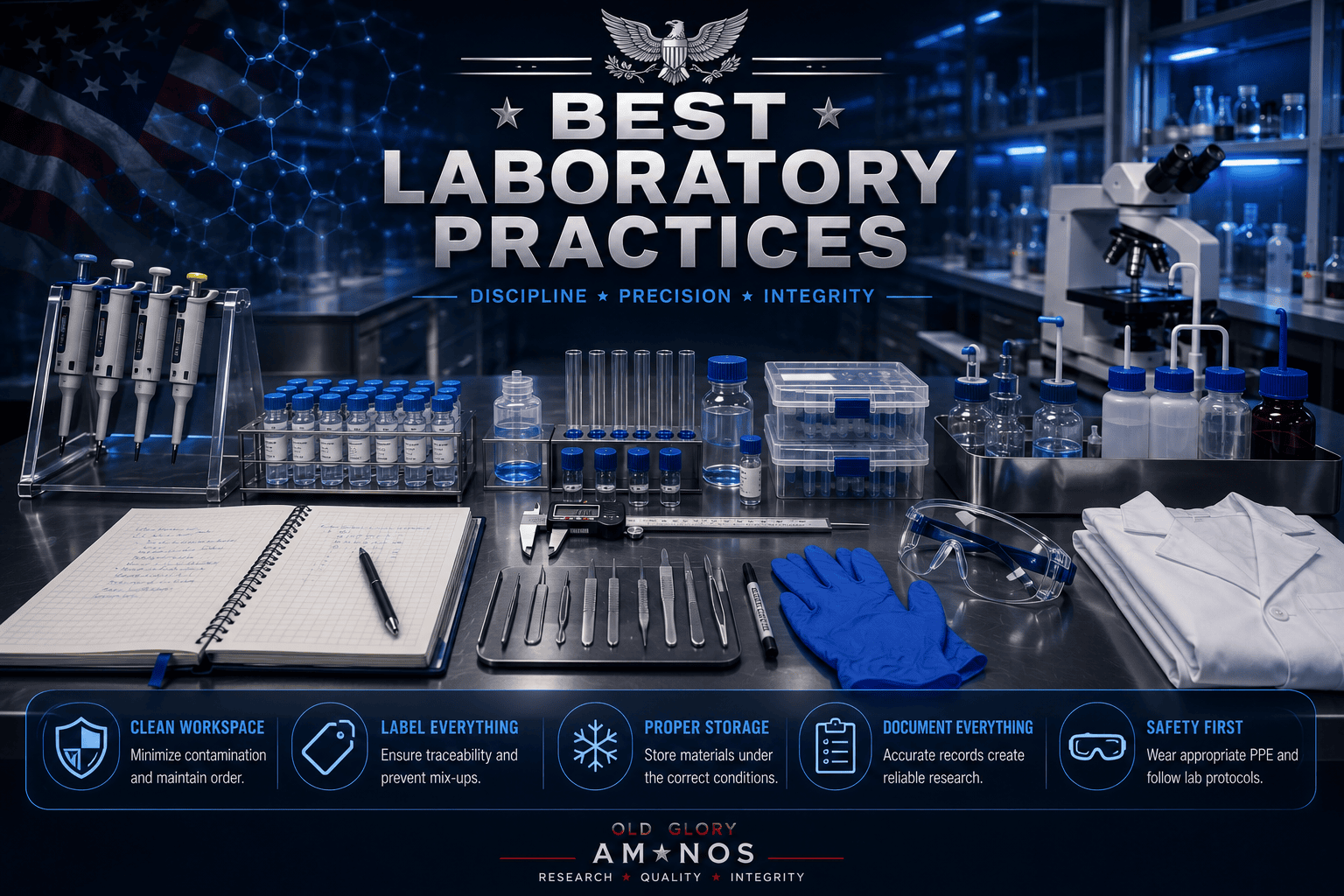
Reliable research depends on more than the quality of the materials being studied. It also depends on how samples are identified, handled, measured, documented, and protected from contamination throughout the research process.
Small inconsistencies—such as incomplete labeling, unrecorded procedural changes, contaminated equipment, or unreliable measurements—can introduce variables that make results more difficult to interpret or reproduce.
Good laboratory practices help control those variables. Consistent procedures, clear records, appropriate equipment, and careful sample handling create a more traceable research process and make it easier to understand what happened, what was measured, and how a result was produced.
🔬 RESEARCH NOTE
Good laboratory practice is not simply about keeping a workspace neat. Its larger purpose is to reduce avoidable sources of error and create a documented research process that can be evaluated and reproduced.
Keep Your Workspace & Equipment Clean
A clean, organized workspace helps reduce the risk of contamination and cross-contamination between research materials.
Work surfaces, reusable equipment, containers, and tools should be cleaned or prepared according to the procedures appropriate for the work being performed. Unnecessary materials should also be kept away from the active work area to reduce opportunities for accidental contact, spills, or sample mix-ups.
Contamination is not always obvious. Even small amounts of material transferred from a surface, tool, container, or another sample can introduce an unwanted variable into an experiment.
⚠️ IMPORTANT DISTINCTION
A workspace that looks clean is not necessarily free from contamination. Visual cleanliness and contamination control are related, but they are not the same thing.
🔬 RESEARCH NOTE
When the same equipment or workspace is used with multiple materials, procedures that reduce carryover between samples become especially important for maintaining the integrity of subsequent work.
Label Samples for Traceability
Clear labeling helps maintain the connection between a research material, its source, and the work performed with it. Without that connection, even accurate analytical results can become difficult to interpret later.
Depending on the research procedure, useful sample information may include the material or sample name, lot or batch number, unique sample identifier, preparation date, concentration or other preparation details, and relevant storage information. The label itself does not need to contain every experimental detail, but it should provide enough information to connect the sample to the corresponding laboratory record.
Consistent naming conventions are also important. Using the same identifier on the sample container, experimental records, analytical data, and related documentation makes it easier to follow the sample throughout the research process.
📊 READING THE DATA
Think of sample identification as a chain: material → sample → experiment → analytical result. Clear identifiers help preserve that connection from beginning to end.
⚠️ IMPORTANT DISTINCTION
A label identifies the container. Traceability connects that container to its history. Good traceability depends on both accurate labeling and complete documentation.
Use Appropriate & Reliable Equipment
Research results are only as reliable as the measurements used to produce them. Equipment such as balances, pipettes, temperature-monitoring devices, and analytical instruments should be appropriate for the measurement being performed and used within their intended operating range.
Laboratory equipment may also require routine calibration, verification, maintenance, or performance checks, depending on the instrument and procedure. These practices help establish that measurements are being produced consistently and within acceptable limits.
Even careful technique cannot fully compensate for equipment that is inaccurate, improperly maintained, or unsuitable for the measurement being made.
🔬 RESEARCH NOTE
Equipment records can also become part of experimental traceability. Documenting which instrument was used—or its calibration or maintenance status when relevant—can help researchers investigate unexpected results later.
Document Every Step
Good laboratory documentation creates a record of what was done, when it was done, and under what conditions. Complete records make research easier to evaluate, reproduce, and troubleshoot when unexpected results occur.
Depending on the experiment, records may include sample identifiers, dates, procedures, measurements, equipment used, instrument settings, observations, analytical results, and any changes or deviations from the planned procedure.
Details that seem unimportant during an experiment can become extremely useful later. Recording them as the work is performed reduces reliance on memory and helps preserve the context surrounding the final results.
🔬 RESEARCH NOTE
Unexpected results are not the only findings worth documenting. Deviations, unusual observations, failed runs, and procedural changes can provide valuable information when evaluating an experiment later.
⚠️ IMPORTANT DISTINCTION
Good documentation should describe what actually happened, not simply what was supposed to happen. If a procedure changes during an experiment, the record should reflect that change.
Store Materials Properly
Storage conditions can influence the stability and integrity of research materials over time. Depending on the material, factors such as temperature, moisture, light, and oxygen exposure may need to be controlled.
Because stability requirements vary between compounds and formulations, storage conditions should be based on the specific material and the form in which it is being stored, rather than applying one rule to everything in the laboratory.
Consistent storage practices also help reduce an avoidable source of variation between experiments.
🔬 RESEARCH NOTE
Dry or lyophilized materials and materials stored in solution may have different stability considerations. Preparation of a material can change the conditions that influence its stability.
For a deeper look at temperature, moisture, light exposure, freeze–thaw considerations, and dry versus solution storage, see Storage & Handling.
Wear Appropriate Safety Equipment
Appropriate personal protective equipment helps reduce exposure to laboratory hazards and can also help protect research materials from accidental contamination.
The equipment required depends on the materials, procedures, and hazards involved. Depending on the work being performed, laboratory precautions may include gloves, protective eyewear, laboratory coats, appropriate ventilation, or other protective equipment specified by the laboratory’s safety procedures.
Protective equipment should be selected based on the actual risks associated with the work rather than treated as a universal checklist.
⚠️ IMPORTANT DISTINCTION
Personal protective equipment is only one part of laboratory safety. Safe procedures, appropriate equipment, ventilation, material-specific precautions, and established laboratory protocols all contribute to reducing risk.
🔬 RESEARCH NOTE
Gloves and other protective equipment can themselves become sources of cross-contamination if they contact one material or surface and are then used to handle another. Proper use matters just as much as simply wearing them.
Key Takeaways
Strong laboratory practices help reduce avoidable variables and create research that is easier to evaluate, trace, and reproduce.
- Clean workspaces and equipment help reduce contamination and cross-contamination.
- Clear sample labeling and traceability maintain the connection between materials, experiments, and analytical results.
- Appropriate, properly maintained equipment supports reliable measurements.
- Complete documentation should record what actually happened, including observations, changes, and deviations.
- Storage and handling conditions should reflect the specific material and its form, rather than relying on universal rules.
- Appropriate safety practices and protective equipment help protect both researchers and the integrity of the work.
Continue Your Research....
How to Read a COA
How to Read a Scientific Paper
Storage and Handling
Research Ethics and Methodology
How to Read an HPLC Chromatogram
References & Further Reading
Organisation for Economic Co-operation and Development (OECD). OECD Principles on Good Laboratory Practice. OECD Series on Principles of Good Laboratory Practice and Compliance Monitoring, No. 1. OECD Publishing, 1998.
OECD Principles on Good Laboratory Practice
This is our strongest overall reference. It directly covers sample identification and labeling, handling and storage, equipment cleaning and calibration, SOPs, deviations, documentation, and record keeping. OECDOECD. Management, Characterisation and Use of Test Items used in GLP Studies. OECD Series on Principles of Good Laboratory Practice and Compliance Monitoring, No. 19, 2018.
OECD guidance on management and use of test items
Especially useful for our labeling and traceability section. It specifically addresses how test materials are received, identified, labeled, sampled, handled, stored, characterized, archived, and disposed. OECDOECD. Guidance Document on Good In Vitro Method Practices (GIVIMP): Apparatus, Materials and Reagents.
OECD guidance on laboratory apparatus and equipment
This backs up our equipment section nicely: inspection, cleaning, maintenance, calibration, monitoring, record keeping, and ensuring equipment is suitable for its intended purpose. OECDNational Institutes of Health (NIH). Enhancing Reproducibility through Rigor and Transparency.
NIH Rigor and Reproducibility guidance
Supports the larger point behind the article: rigorous methodology, transparent reporting, and reproducibility are fundamental to reliable scientific research. Grants.govNational Institutes of Health. Guidelines for the Conduct of Research at the National Institutes of Health — Data Management.
NIH Guidelines for the Conduct of Research
Particularly relevant to Document Every Step. NIH emphasizes careful recording of experimental protocols, primary instrument data, analysis procedures, and records sufficient for later review and repetition of research.
Research Disclaimer
The information provided in this guide is intended solely for educational and research purposes. It is designed to help readers understand common laboratory analytical terminology and should not be interpreted as medical advice or as a statement regarding the safety, efficacy, or intended use of any research material.