
How Does a Compound Become FDA Approved?
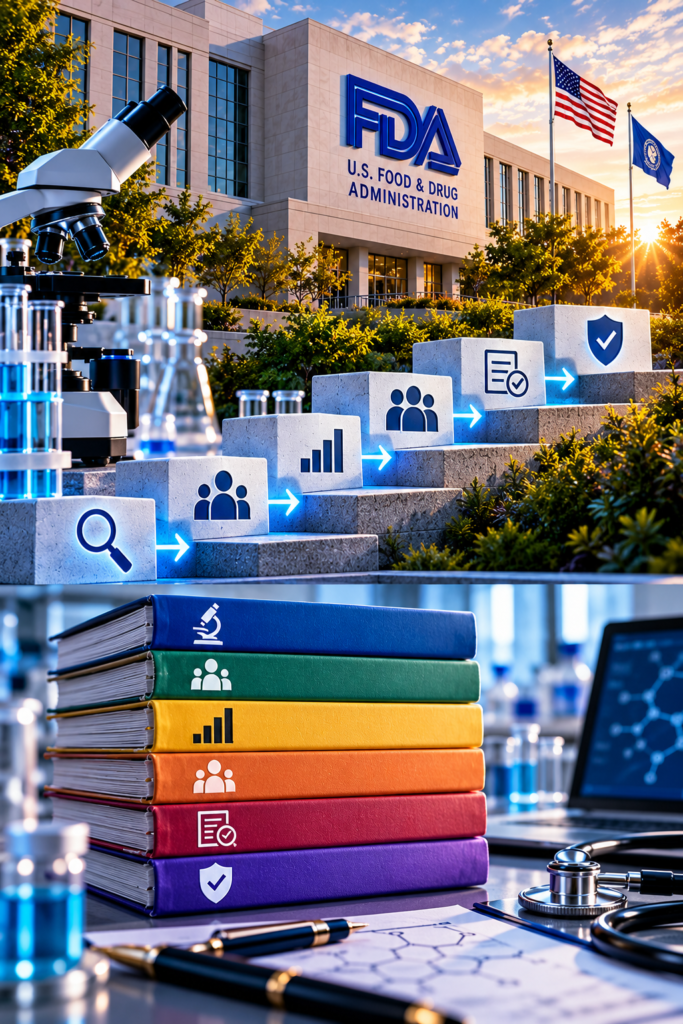
AT A GLANCE
Reading Time: 10-12 minutes
You’ll Learn
How a compound progresses from laboratory discovery to FDA review.
What happens during preclinical research and the three main phases of human clinical trials.
How standard approval differs from accelerated and other expedited FDA pathways.
Why some promising compounds never receive approval.
What FDA approval establishes—and what it doesn’t.
Why the absence of FDA approval does not necessarily mean a compound has been proven ineffective or unsafe.
Introduction
From Scientific Curiosity to an Approved Medication
Imagine a researcher discovers a compound that produces an interesting biological response in laboratory cells.
Perhaps it interacts with a particular receptor, influences an inflammatory pathway, or changes how cells communicate with one another.
It’s an exciting discovery. But what does it actually mean?
At this early stage, scientists may have identified something worth investigating. They haven’t necessarily discovered a medication.
A substance that behaves one way in a laboratory dish may behave very differently inside a living organism. Even when animal studies produce encouraging results, those findings don’t guarantee the same outcomes in humans.
This is where the lengthy process of drug development begins.
In the United States, the Food and Drug Administration (FDA) is responsible for evaluating whether new drugs meet regulatory standards for safety, effectiveness, and quality before they can be marketed for their intended medical uses.
But the FDA doesn’t ordinarily conduct the clinical trials itself. Drug developers, universities, research institutions, and other sponsors generate and submit the evidence the agency evaluates.
That distinction matters because FDA approval isn’t simply a matter of scientists discovering something promising and asking the government for permission to sell it.
It’s an evidence-building process, often involving thousands of research participants, substantial financial investment, and years of investigation.
And sometimes, even after years of promising research, a compound never reaches approval.
Why?
The answer isn’t always as straightforward as people might assume.
Some compounds prove ineffective in larger studies. Others raise safety concerns that weren’t apparent in earlier experiments. Some face manufacturing challenges, while others are abandoned because the financial resources needed to continue development are unavailable.
Understanding these different outcomes is essential to interpreting a compound’s regulatory status.
🔬 RESEARCH NOTE — Approval Is Specific, Not Universal
FDA approval applies to a particular drug product and its approved conditions of use. It doesn’t automatically establish that every formulation, route of administration, or proposed application of the same active ingredient has been evaluated or approved.
That is especially important when discussing investigational peptides, which may be studied in multiple forms or for different potential applications.
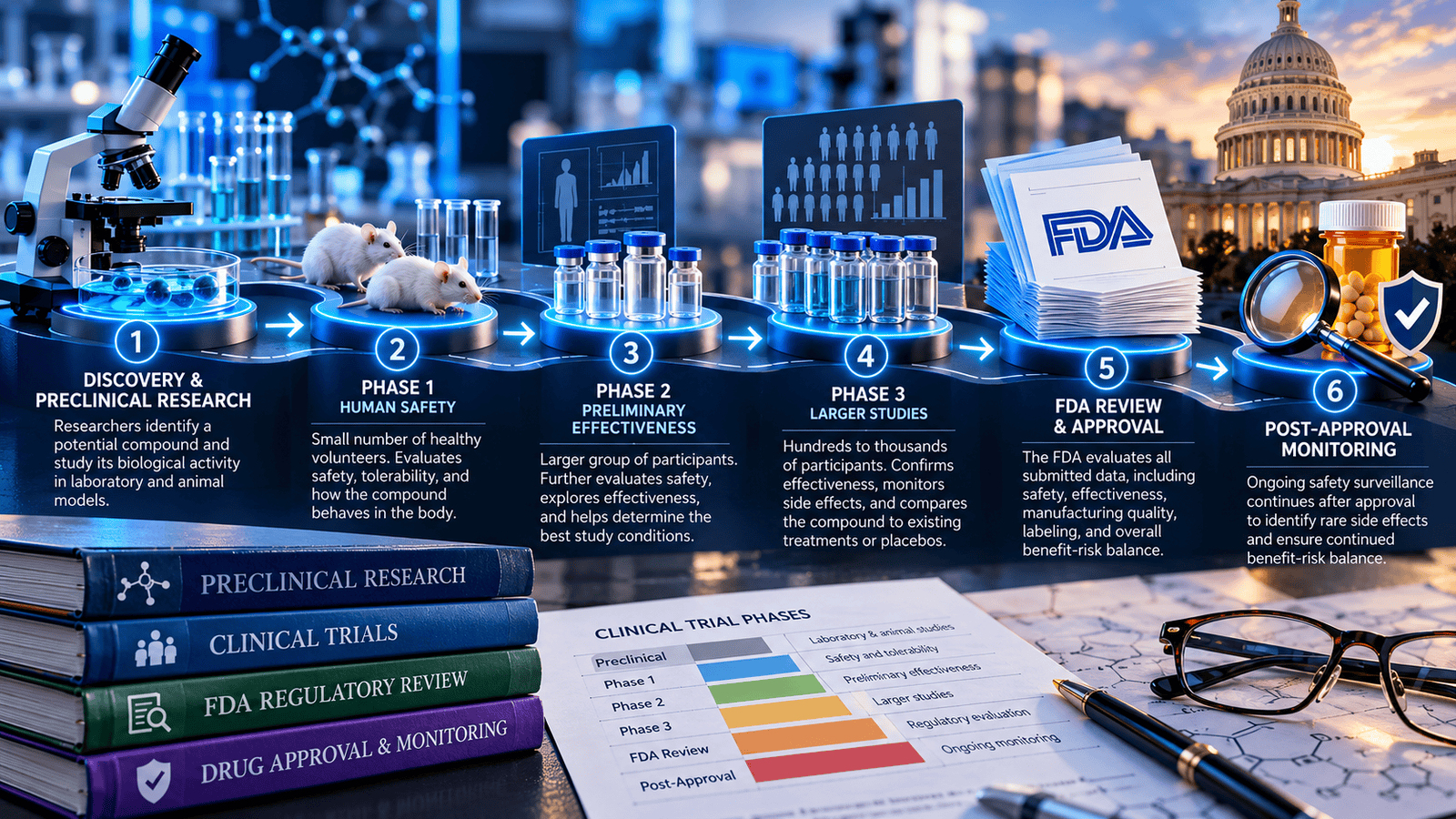
The Journey from Laboratory Discovery to FDA Approval
Every FDA-approved medication begins with scientific research. But discovering a compound with interesting biological properties is only the beginning.
Before human testing can begin, researchers must gather evidence that the compound is worth investigating and that its potential risks can be appropriately evaluated.
1. Discovery: Finding Something Worth Studying
Scientists identify compounds that interact with biological processes, such as inflammation, metabolism, or cellular communication.
Early laboratory experiments help determine whether those interactions warrant further investigation.
A promising discovery, however, does not automatically mean a compound will work as a medication.
2. Preclinical Research: Testing Before Humans
Researchers use laboratory experiments and animal studies to investigate:
Biological activity: What does the compound do?
Safety: Are there signs of toxicity or harmful effects?
Metabolism: How does the body process and eliminate it?
Quality: Can it be manufactured consistently?
⚠️ IMPORTANT DISTINCTION
Positive laboratory or animal results do not guarantee the same outcomes in humans. This is why clinical trials are necessary.
3. The IND: Permission to Begin Human Trials
Before most new drugs can enter clinical trials in the United States, the research sponsor submits an Investigational New Drug (IND) application to the FDA.
This includes preclinical findings, manufacturing information, and plans for protecting study participants.
The FDA generally has 30 days to review an initial IND for safety concerns before the proposed study may proceed.
🔬 RESEARCH NOTE
An IND is not FDA approval. It allows clinical investigation to proceed under regulatory oversight, but the compound remains investigational.
What’s Next?
Once the necessary requirements are satisfied, researchers can begin human clinical trials to evaluate safety and effectiveness.
This is where the next major stage of drug development begins.
Clinical Trial Phases Explained in Plain English
Once a compound completes preclinical testing and receives clearance to begin human studies, researchers move into clinical trials.
These trials typically progress through three main phases, each designed to answer different questions about safety and effectiveness.
Phase 1: Is It Safe Enough to Study Further?
Typical participants: 20–100
Researchers investigate how the compound behaves in humans, how the body processes it, and what side effects may occur.
These studies often involve healthy volunteers, although some treatments are first tested in patients with specific medical conditions.
Phase 2: Does It Show Signs of Working?
Typical participants: Several dozen to several hundred
Researchers begin evaluating whether the compound produces the intended clinical effect while continuing to monitor safety.
This is often where promising laboratory findings face their first substantial test in patients.
Phase 3: Does the Evidence Hold Up?
Typical participants: Several hundred to several thousand
Larger studies evaluate effectiveness, identify additional risks, and often compare the investigational treatment with existing treatments or a placebo.
Successful Phase 3 results can provide much of the evidence needed to support an FDA approval application.
What Happens After Phase 3?
If the evidence supports moving forward, the sponsor may submit a New Drug Application (NDA) or, for certain biological products, a Biologics License Application (BLA).
The FDA then evaluates the submitted evidence, manufacturing information, and proposed labeling before making a regulatory decision.
⚠️ IMPORTANT DISTINCTION
Completing clinical trials does not guarantee FDA approval. The agency must determine whether the evidence supports the product’s safety and effectiveness for its proposed use.
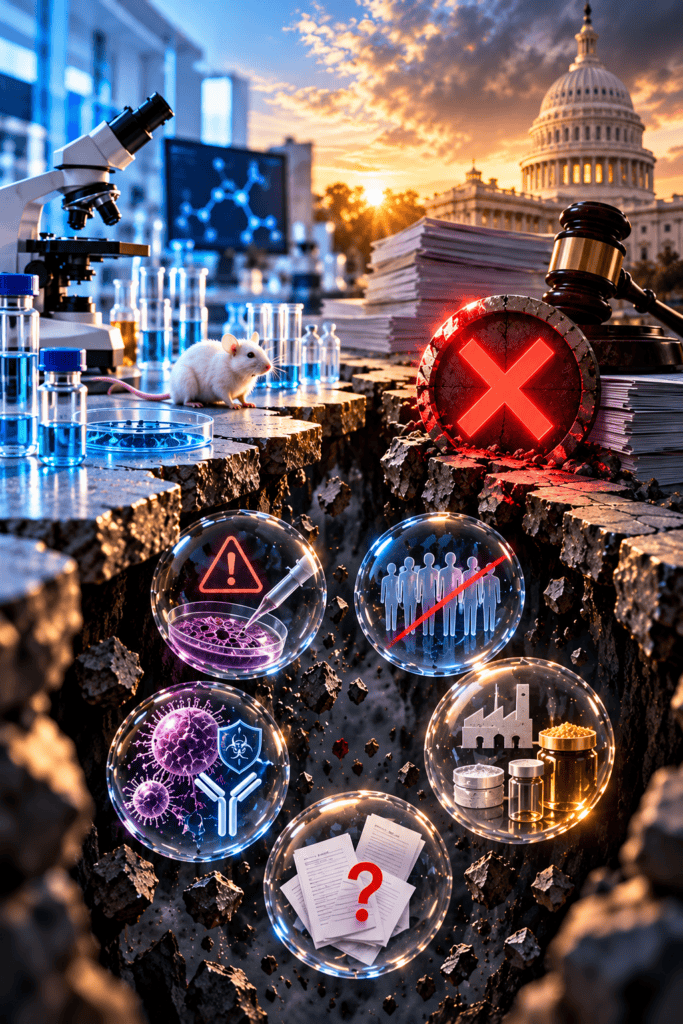
Standard vs. Expedited FDA Approval Pathways
Not every medication follows the same timeline to FDA approval.
While most drugs undergo standard development and review, the FDA offers several programs designed to help promising treatments for serious conditions reach patients sooner.
Standard Review: The Traditional Route
Under standard review, the FDA generally aims to act on a new drug application within 10 months of its filing date.
The agency evaluates clinical evidence, potential risks, manufacturing quality, and proposed labeling before deciding whether the drug meets approval requirements.
Expedited Programs: When Time Matters
For serious conditions, particularly when existing treatments are limited, the FDA offers four important programs:
Fast Track: Encourages closer communication between developers and the FDA to help advance promising treatments.
Breakthrough Therapy: Provides additional development guidance when early human evidence suggests a treatment may offer substantial improvement over existing options.
Priority Review: Shortens the FDA’s target application review period from 10 months to 6 months.
Accelerated Approval: Allows certain drugs to receive approval based on measurements reasonably likely to predict clinical benefit, with additional studies required to confirm that benefit.
A drug may qualify for more than one of these programs.
Does Faster Approval Mean Lower Safety Standards?
Not necessarily. Expedited programs are designed to make development or review more efficient, not simply eliminate safety requirements.
However, accelerated approval can involve greater uncertainty about clinical benefit at the time of approval. Confirmatory studies are required, and approval may be withdrawn if the expected benefit is not verified.
💡 DID YOU KNOW?
Breakthrough Therapy designation doesn’t mean a drug has been proven to work or is guaranteed FDA approval. It means preliminary clinical evidence suggests the treatment may offer a substantial improvement worth investigating further.
⚠️ IMPORTANT DISTINCTION
An expedited designation is not the same as FDA approval. A compound can receive Fast Track or Breakthrough Therapy designation and still fail to meet the requirements for marketing approval.
Why Some Compounds Never Receive FDA Approval
Not every promising compound becomes an FDA-approved medication. In fact, many never make it through the development process.
While safety and effectiveness are major considerations, scientific results aren’t the only factors that determine whether a compound reaches the market.
1. Safety Concerns
Some compounds produce unexpected side effects or toxic effects during testing. If the risks outweigh the potential benefits, development may be discontinued.
2. Insufficient Evidence of Effectiveness
A compound might demonstrate promising results in laboratory or animal studies but fail to produce meaningful benefits in human clinical trials.
Even encouraging early human studies don’t guarantee success in larger trials.
3. Financial and Commercial Challenges
Clinical trials can be extraordinarily expensive.
Developers may discontinue research because of funding limitations, business priorities, or insufficient commercial incentives—even when early scientific findings are promising.
4. Manufacturing and Quality Problems
A compound must be manufactured consistently and meet appropriate quality standards.
Problems involving purity, stability, contamination, or manufacturing processes can delay or prevent approval.
5. Research That Never Reaches the FDA
Some compounds remain in early research indefinitely. Others are studied academically without a company or institution pursuing commercial approval.
Without a completed application and sufficient supporting evidence, the FDA generally has no basis to approve the compound.
⚠️ IMPORTANT DISTINCTION — Unapproved Does Not Always Mean Rejected
There is a meaningful difference between a compound that:
Has never been submitted for FDA approval.
Was investigated but abandoned during development.
Was formally reviewed and not approved because the submitted evidence was insufficient.
These situations have different scientific and regulatory implications.
🔬 RESEARCH NOTE
The absence of FDA approval does not, by itself, establish that a compound is ineffective or unsafe. However, it also means the FDA has not established that a particular drug product meets its standards for safety and effectiveness for the proposed use.
Understanding why a compound remains unapproved is often more informative than its approval status alone.
What FDA Approval Does—and Doesn’t—Mean
FDA approval is an important milestone in drug development, but what does it actually tell us?
What FDA Approval Means
When the FDA approves a medication, it has determined that:
Benefits outweigh risks: The available evidence supports a favorable benefit-risk balance for the drug’s approved use.
Effectiveness is supported: Clinical evidence demonstrates that the medication works for its intended purpose under the applicable approval standards.
Quality standards are met: Manufacturing processes and controls meet regulatory requirements.
Proper labeling is established: Approved instructions, warnings, and safety information are provided.
Approval applies to a specific drug product and its approved uses—not automatically to every possible application of the same compound.
What FDA Approval Doesn’t Mean
FDA approval does not mean a medication is:
Completely risk-free: Even approved medications can cause serious side effects.
Effective for everyone: Individual responses vary, and some patients may not benefit.
Approved for every possible use: Additional applications may require further investigation and approval.
Finished being studied: Research and safety monitoring continue after approval.
Can FDA Approval Be Withdrawn?
Yes. The FDA can withdraw approval under certain circumstances, including when new evidence reveals significant safety concerns or a drug no longer meets applicable regulatory requirements.
💡 DID YOU KNOW?
Some side effects are too rare to become apparent during clinical trials. Once a medication is used by much larger populations, additional safety concerns may emerge. This is one reason post-approval monitoring is so important.
⚠️ IMPORTANT DISTINCTION — Approval Is Not a Guarantee
FDA approval means the available evidence satisfies regulatory requirements for a particular product and use. It is not a guarantee of perfect safety, universal effectiveness, or permanent approval.
Likewise, a compound without FDA approval has not necessarily been proven harmful or ineffective. Its approval status must be understood alongside the available scientific evidence and regulatory history.
Key Takeaways
FDA approval is a process, not a single test. Compounds undergo laboratory research, preclinical testing, human clinical trials, and regulatory review before they can receive approval.
Promising research doesn’t guarantee success. Results from laboratory or animal studies don’t always translate into safe and effective treatments for humans.
Not all compounds follow the same timeline. The FDA offers expedited programs for certain treatments addressing serious conditions, but faster review doesn’t guarantee approval.
Unapproved doesn’t automatically mean unsafe or ineffective. Some compounds never complete development because of financial limitations, insufficient research, or other obstacles. However, their safety and effectiveness may remain unestablished.
FDA approval isn’t a guarantee of perfect safety. Approved medications can still have side effects, and research continues after they reach the market.
Understanding the evidence matters. A compound’s regulatory status is important, but so are the quality of its research, the reasons behind regulatory decisions, and the scientific questions that remain unanswered.
The Bottom Line
FDA approval provides an important framework for evaluating medications, but scientific understanding continues to evolve. Knowing how the approval process works helps readers distinguish established evidence from promising research—and make better-informed judgments about the information they encounter.
Continue Your Research...
How to Read a COA
Understanding Purity Percentages
How to Read a Scientific Paper
Research Ethics and Methodology
Understanding FDA Regulations
References
1. U.S. Food and Drug Administration (FDA). The Drug Development Process.
Overview of the five major stages of drug development, from laboratory discovery through post-market safety monitoring.
https://www.fda.gov/patients/learn-about-drug-and-device-approvals/drug-development-process
2. U.S. Food and Drug Administration (FDA). Step 1: Discovery and Development.
Explains how scientists identify promising compounds and begin evaluating their biological properties.
https://www.fda.gov/patients/drug-development-process/step-1-discovery-and-development
3. U.S. Food and Drug Administration (FDA). Investigational New Drug (IND) Application.
Describes the regulatory process and requirements for beginning clinical investigations of new drugs.
https://www.fda.gov/drugs/types-applications/investigational-new-drug-application-ind
4. U.S. Food and Drug Administration (FDA). Step 3: Clinical Research.
Explains the phases of human clinical trials, including their objectives and typical participant populations.
https://www.fda.gov/patients/drug-development-process/step-3-clinical-research
5. U.S. Food and Drug Administration (FDA). Fast Track, Breakthrough Therapy, Accelerated Approval, Priority Review.
Outlines the four major programs designed to expedite drug development or regulatory review for qualifying treatments.
https://www.fda.gov/patients/learn-about-drug-and-device-approvals/fast-track-breakthrough-therapy-accelerated-approval-priority-review
6. U.S. Food and Drug Administration (FDA). Development & Approval Process — Drugs.
Explains FDA approval standards, application review, and regulatory oversight.
https://www.fda.gov/drugs/development-approval-process-drugs
7. U.S. Food and Drug Administration (FDA). Step 5: FDA Post-Market Drug Safety Monitoring.
Explains how the FDA continues monitoring medication safety after approval.
https://www.fda.gov/patients/drug-development-process/step-5-fda-post-market-drug-safety-monitoring
Research Disclaimer
The information provided in this guide is intended solely for educational and research purposes. It is designed to help readers understand common laboratory analytical terminology and should not be interpreted as medical advice or as a statement regarding the safety, efficacy, or intended use of any research material.
How Does a Compound Become FDA Approved?
At a Glance
Reading Time: 10-12 minutes
You’ll Learn
How a compound progresses from laboratory discovery to FDA review.
What happens during preclinical research and the three main phases of human clinical trials.
How standard approval differs from accelerated and other expedited FDA pathways.
Why some promising compounds never receive approval.
What FDA approval establishes—and what it doesn’t.
Why the absence of FDA approval does not necessarily mean a compound has been proven ineffective or unsafe.
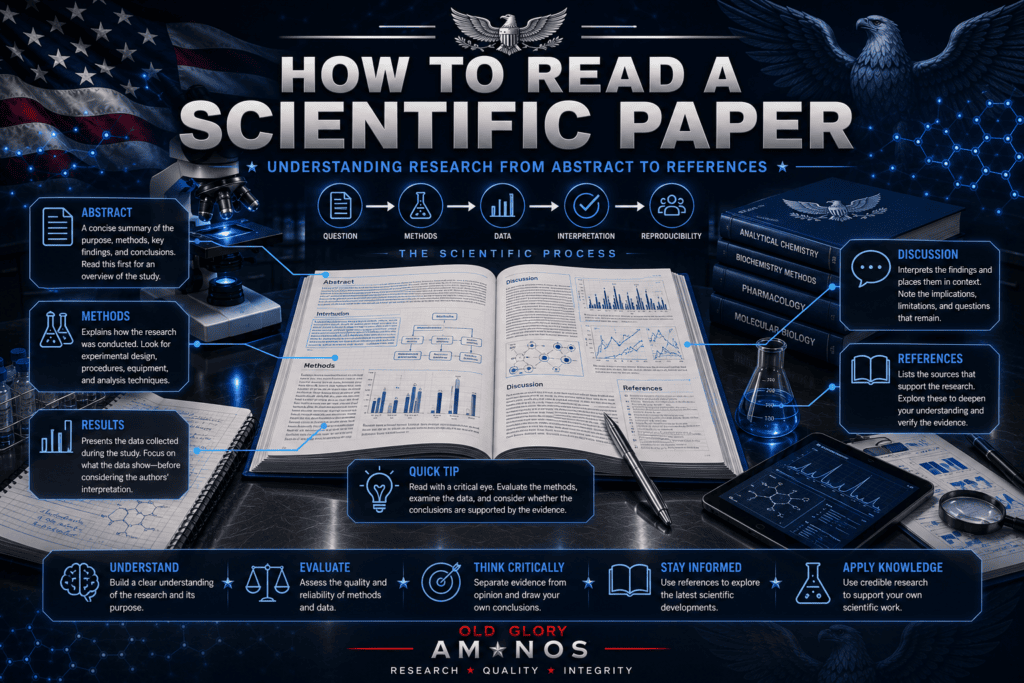
You’ll Learn
- The major sections found in most scientific papers
- Which sections to read first
- How to distinguish conclusions from evidence
- Why methods and references matter
- Tips for evaluating research critically
Introduction
From Scientific Curiosity to an Approved Medication
Imagine a researcher discovers a compound that produces an interesting biological response in laboratory cells.
Perhaps it interacts with a particular receptor, influences an inflammatory pathway, or changes how cells communicate with one another.
It’s an exciting discovery. But what does it actually mean?
At this early stage, scientists may have identified something worth investigating. They haven’t necessarily discovered a medication.
A substance that behaves one way in a laboratory dish may behave very differently inside a living organism. Even when animal studies produce encouraging results, those findings don’t guarantee the same outcomes in humans.
This is where the lengthy process of drug development begins.
In the United States, the Food and Drug Administration (FDA) is responsible for evaluating whether new drugs meet regulatory standards for safety, effectiveness, and quality before they can be marketed for their intended medical uses.
But the FDA doesn’t ordinarily conduct the clinical trials itself. Drug developers, universities, research institutions, and other sponsors generate and submit the evidence the agency evaluates.
That distinction matters because FDA approval isn’t simply a matter of scientists discovering something promising and asking the government for permission to sell it.
It’s an evidence-building process, often involving thousands of research participants, substantial financial investment, and years of investigation.
And sometimes, even after years of promising research, a compound never reaches approval.
Why?
The answer isn’t always as straightforward as people might assume.
Some compounds prove ineffective in larger studies. Others raise safety concerns that weren’t apparent in earlier experiments. Some face manufacturing challenges, while others are abandoned because the financial resources needed to continue development are unavailable.
Understanding these different outcomes is essential to interpreting a compound’s regulatory status.
🔬 RESEARCH NOTE — Approval Is Specific, Not Universal
FDA approval applies to a particular drug product and its approved conditions of use. It doesn’t automatically establish that every formulation, route of administration, or proposed application of the same active ingredient has been evaluated or approved.
That is especially important when discussing investigational peptides, which may be studied in multiple forms or for different potential applications.
The Journey from Laboratory Discovery to FDA Approval
Every FDA-approved medication begins with scientific research. But discovering a compound with interesting biological properties is only the beginning.
Before human testing can begin, researchers must gather evidence that the compound is worth investigating and that its potential risks can be appropriately evaluated.
1. Discovery: Finding Something Worth Studying
Scientists identify compounds that interact with biological processes, such as inflammation, metabolism, or cellular communication.
Early laboratory experiments help determine whether those interactions warrant further investigation.
A promising discovery, however, does not automatically mean a compound will work as a medication.
2. Preclinical Research: Testing Before Humans
Researchers use laboratory experiments and animal studies to investigate:
Biological activity: What does the compound do?
Safety: Are there signs of toxicity or harmful effects?
Metabolism: How does the body process and eliminate it?
Quality: Can it be manufactured consistently?
⚠️ IMPORTANT DISTINCTION
Positive laboratory or animal results do not guarantee the same outcomes in humans. This is why clinical trials are necessary.
3. The IND: Permission to Begin Human Trials
Before most new drugs can enter clinical trials in the United States, the research sponsor submits an Investigational New Drug (IND) application to the FDA.
This includes preclinical findings, manufacturing information, and plans for protecting study participants.
The FDA generally has 30 days to review an initial IND for safety concerns before the proposed study may proceed.
🔬 RESEARCH NOTE
An IND is not FDA approval. It allows clinical investigation to proceed under regulatory oversight, but the compound remains investigational.
What’s Next?
Once the necessary requirements are satisfied, researchers can begin human clinical trials to evaluate safety and effectiveness.
This is where the next major stage of drug development begins.
Clinical Trial Phases Explained in Plain English
Once a compound completes preclinical testing and receives clearance to begin human studies, researchers move into clinical trials.
These trials typically progress through three main phases, each designed to answer different questions about safety and effectiveness.
Phase 1: Is It Safe Enough to Study Further?
Typical participants: 20–100
Researchers investigate how the compound behaves in humans, how the body processes it, and what side effects may occur.
These studies often involve healthy volunteers, although some treatments are first tested in patients with specific medical conditions.
Phase 2: Does It Show Signs of Working?
Typical participants: Several dozen to several hundred
Researchers begin evaluating whether the compound produces the intended clinical effect while continuing to monitor safety.
This is often where promising laboratory findings face their first substantial test in patients.
Phase 3: Does the Evidence Hold Up?
Typical participants: Several hundred to several thousand
Larger studies evaluate effectiveness, identify additional risks, and often compare the investigational treatment with existing treatments or a placebo.
Successful Phase 3 results can provide much of the evidence needed to support an FDA approval application.
What Happens After Phase 3?
If the evidence supports moving forward, the sponsor may submit a New Drug Application (NDA) or, for certain biological products, a Biologics License Application (BLA).
The FDA then evaluates the submitted evidence, manufacturing information, and proposed labeling before making a regulatory decision.
⚠️ IMPORTANT DISTINCTION
Completing clinical trials does not guarantee FDA approval. The agency must determine whether the evidence supports the product’s safety and effectiveness for its proposed use.

Standard vs. Expedited FDA Approval Pathways
Not every medication follows the same timeline to FDA approval.
While most drugs undergo standard development and review, the FDA offers several programs designed to help promising treatments for serious conditions reach patients sooner.
Standard Review: The Traditional Route
Under standard review, the FDA generally aims to act on a new drug application within 10 months of its filing date.
The agency evaluates clinical evidence, potential risks, manufacturing quality, and proposed labeling before deciding whether the drug meets approval requirements.
Expedited Programs: When Time Matters
For serious conditions, particularly when existing treatments are limited, the FDA offers four important programs:
Fast Track: Encourages closer communication between developers and the FDA to help advance promising treatments.
Breakthrough Therapy: Provides additional development guidance when early human evidence suggests a treatment may offer substantial improvement over existing options.
Priority Review: Shortens the FDA’s target application review period from 10 months to 6 months.
Accelerated Approval: Allows certain drugs to receive approval based on measurements reasonably likely to predict clinical benefit, with additional studies required to confirm that benefit.
A drug may qualify for more than one of these programs.
Does Faster Approval Mean Lower Safety Standards?
Not necessarily. Expedited programs are designed to make development or review more efficient, not simply eliminate safety requirements.
However, accelerated approval can involve greater uncertainty about clinical benefit at the time of approval. Confirmatory studies are required, and approval may be withdrawn if the expected benefit is not verified.
💡 DID YOU KNOW?
Breakthrough Therapy designation doesn’t mean a drug has been proven to work or is guaranteed FDA approval. It means preliminary clinical evidence suggests the treatment may offer a substantial improvement worth investigating further.
⚠️ IMPORTANT DISTINCTION
An expedited designation is not the same as FDA approval. A compound can receive Fast Track or Breakthrough Therapy designation and still fail to meet the requirements for marketing approval.
Why Some Compounds Never Receive FDA Approval
Not every promising compound becomes an FDA-approved medication. In fact, many never make it through the development process.
While safety and effectiveness are major considerations, scientific results aren’t the only factors that determine whether a compound reaches the market.
1. Safety Concerns
Some compounds produce unexpected side effects or toxic effects during testing. If the risks outweigh the potential benefits, development may be discontinued.
2. Insufficient Evidence of Effectiveness
A compound might demonstrate promising results in laboratory or animal studies but fail to produce meaningful benefits in human clinical trials.
Even encouraging early human studies don’t guarantee success in larger trials.
3. Financial and Commercial Challenges
Clinical trials can be extraordinarily expensive.
Developers may discontinue research because of funding limitations, business priorities, or insufficient commercial incentives—even when early scientific findings are promising.
4. Manufacturing and Quality Problems
A compound must be manufactured consistently and meet appropriate quality standards.
Problems involving purity, stability, contamination, or manufacturing processes can delay or prevent approval.
5. Research That Never Reaches the FDA
Some compounds remain in early research indefinitely. Others are studied academically without a company or institution pursuing commercial approval.
Without a completed application and sufficient supporting evidence, the FDA generally has no basis to approve the compound.
⚠️ IMPORTANT DISTINCTION — Unapproved Does Not Always Mean Rejected
There is a meaningful difference between a compound that:
Has never been submitted for FDA approval.
Was investigated but abandoned during development.
Was formally reviewed and not approved because the submitted evidence was insufficient.
These situations have different scientific and regulatory implications.
🔬 RESEARCH NOTE
The absence of FDA approval does not, by itself, establish that a compound is ineffective or unsafe. However, it also means the FDA has not established that a particular drug product meets its standards for safety and effectiveness for the proposed use.
Understanding why a compound remains unapproved is often more informative than its approval status alone.
What FDA Approval Does—and Doesn’t—Mean
FDA approval is an important milestone in drug development, but what does it actually tell us?
What FDA Approval Means
When the FDA approves a medication, it has determined that:
Benefits outweigh risks: The available evidence supports a favorable benefit-risk balance for the drug’s approved use.
Effectiveness is supported: Clinical evidence demonstrates that the medication works for its intended purpose under the applicable approval standards.
Quality standards are met: Manufacturing processes and controls meet regulatory requirements.
Proper labeling is established: Approved instructions, warnings, and safety information are provided.
Approval applies to a specific drug product and its approved uses—not automatically to every possible application of the same compound.
What FDA Approval Doesn’t Mean
FDA approval does not mean a medication is:
Completely risk-free: Even approved medications can cause serious side effects.
Effective for everyone: Individual responses vary, and some patients may not benefit.
Approved for every possible use: Additional applications may require further investigation and approval.
Finished being studied: Research and safety monitoring continue after approval.
Can FDA Approval Be Withdrawn?
Yes. The FDA can withdraw approval under certain circumstances, including when new evidence reveals significant safety concerns or a drug no longer meets applicable regulatory requirements.
💡 DID YOU KNOW?
Some side effects are too rare to become apparent during clinical trials. Once a medication is used by much larger populations, additional safety concerns may emerge. This is one reason post-approval monitoring is so important.
⚠️ IMPORTANT DISTINCTION — Approval Is Not a Guarantee
FDA approval means the available evidence satisfies regulatory requirements for a particular product and use. It is not a guarantee of perfect safety, universal effectiveness, or permanent approval.
Likewise, a compound without FDA approval has not necessarily been proven harmful or ineffective. Its approval status must be understood alongside the available scientific evidence and regulatory history.
Key Takeaways
FDA approval is a process, not a single test. Compounds undergo laboratory research, preclinical testing, human clinical trials, and regulatory review before they can receive approval.
Promising research doesn’t guarantee success. Results from laboratory or animal studies don’t always translate into safe and effective treatments for humans.
Not all compounds follow the same timeline. The FDA offers expedited programs for certain treatments addressing serious conditions, but faster review doesn’t guarantee approval.
Unapproved doesn’t automatically mean unsafe or ineffective. Some compounds never complete development because of financial limitations, insufficient research, or other obstacles. However, their safety and effectiveness may remain unestablished.
FDA approval isn’t a guarantee of perfect safety. Approved medications can still have side effects, and research continues after they reach the market.
Understanding the evidence matters. A compound’s regulatory status is important, but so are the quality of its research, the reasons behind regulatory decisions, and the scientific questions that remain unanswered.
The Bottom Line
FDA approval provides an important framework for evaluating medications, but scientific understanding continues to evolve. Knowing how the approval process works helps readers distinguish established evidence from promising research—and make better-informed judgments about the information they encounter.
Continue Your Research....
How to Read a COA
Understanding Purity Percentages
Research Ethics and Methodology
How to Read a Scientific Paper
Understanding FDA Regulations
References and Further Reading
1. U.S. Food and Drug Administration (FDA). The Drug Development Process.
Overview of the five major stages of drug development, from laboratory discovery through post-market safety monitoring.
https://www.fda.gov/patients/learn-about-drug-and-device-approvals/drug-development-process
2. U.S. Food and Drug Administration (FDA). Step 1: Discovery and Development.
Explains how scientists identify promising compounds and begin evaluating their biological properties.
https://www.fda.gov/patients/drug-development-process/step-1-discovery-and-development
3. U.S. Food and Drug Administration (FDA). Investigational New Drug (IND) Application.
Describes the regulatory process and requirements for beginning clinical investigations of new drugs.
https://www.fda.gov/drugs/types-applications/investigational-new-drug-application-ind
4. U.S. Food and Drug Administration (FDA). Step 3: Clinical Research.
Explains the phases of human clinical trials, including their objectives and typical participant populations.
https://www.fda.gov/patients/drug-development-process/step-3-clinical-research
5. U.S. Food and Drug Administration (FDA). Fast Track, Breakthrough Therapy, Accelerated Approval, Priority Review.
Outlines the four major programs designed to expedite drug development or regulatory review for qualifying treatments.
https://www.fda.gov/patients/learn-about-drug-and-device-approvals/fast-track-breakthrough-therapy-accelerated-approval-priority-review
6. U.S. Food and Drug Administration (FDA). Development & Approval Process — Drugs.
Explains FDA approval standards, application review, and regulatory oversight.
https://www.fda.gov/drugs/development-approval-process-drugs
7. U.S. Food and Drug Administration (FDA). Step 5: FDA Post-Market Drug Safety Monitoring.
Explains how the FDA continues monitoring medication safety after approval.
https://www.fda.gov/patients/drug-development-process/step-5-fda-post-market-drug-safety-monitoring
Research Disclaimer
The information provided in this guide is intended solely for educational and research purposes. It is designed to help readers understand common laboratory analytical terminology and should not be interpreted as medical advice or as a statement regarding the safety, efficacy, or intended use of any research material.